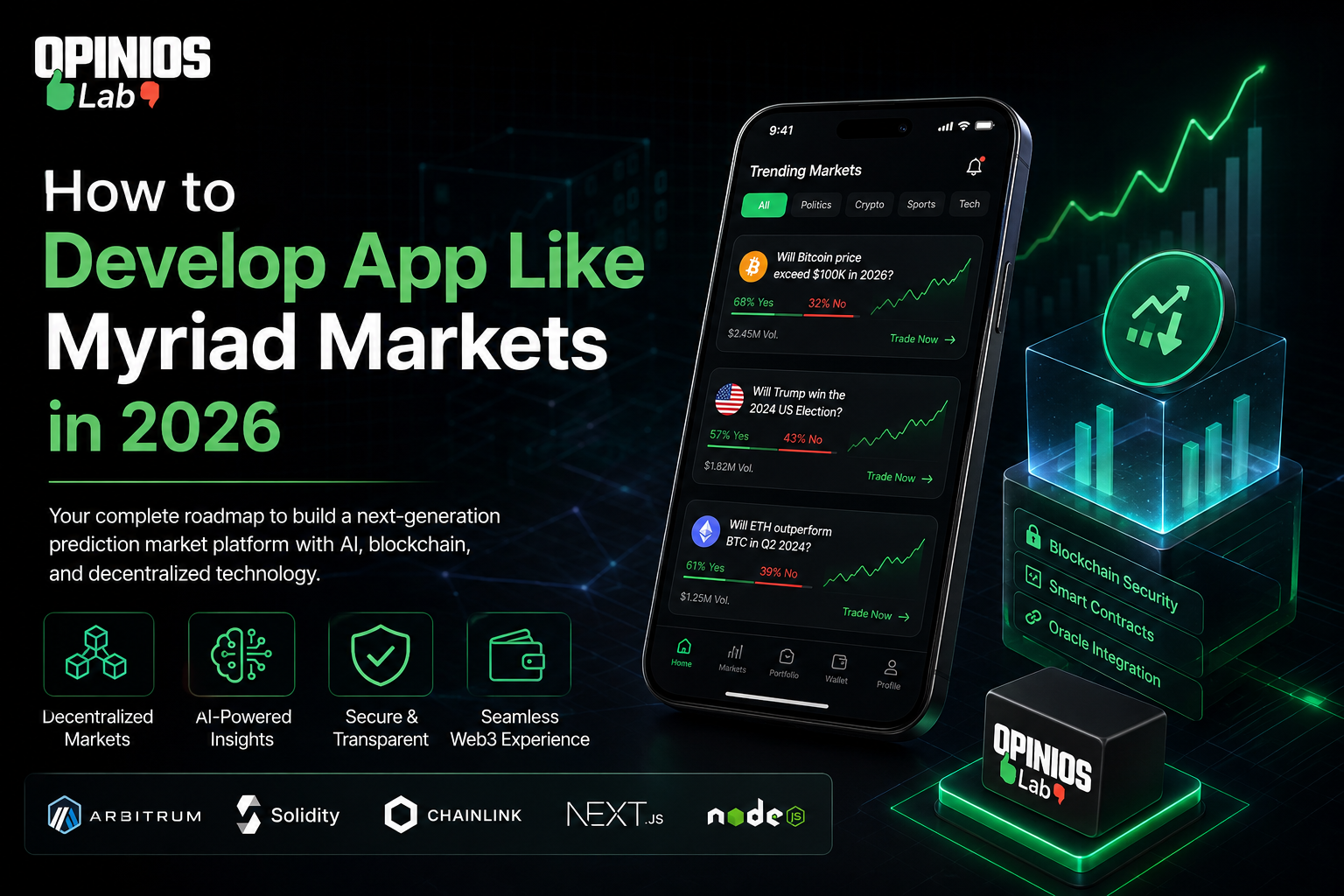
Building a cutting-edge financial trading application like Myriad Markets presents a significant, yet rewarding, challenge. You’re not just creating software; you’re designing a decentralized ecosystem for real-world event forecasting. This endeavor demands a deep understanding of blockchain, financial markets, and advanced technology.
This guide will walk you through the essential steps to develop app like Myriad Markets in 2026. You’ll learn how to navigate the complexities of technology, regulation, and user experience. We’ll cover everything from strategic planning to integrating AI and ensuring robust security.
Be prepared for a journey requiring substantial technical expertise and a strategic vision. The process involves multiple stages, from initial concept to ongoing maintenance, and will require a dedicated team. By following these steps, you can make app like Myriad Markets that stands out in the evolving Web3 landscape.
Step 1: Define Your Vision and Niche
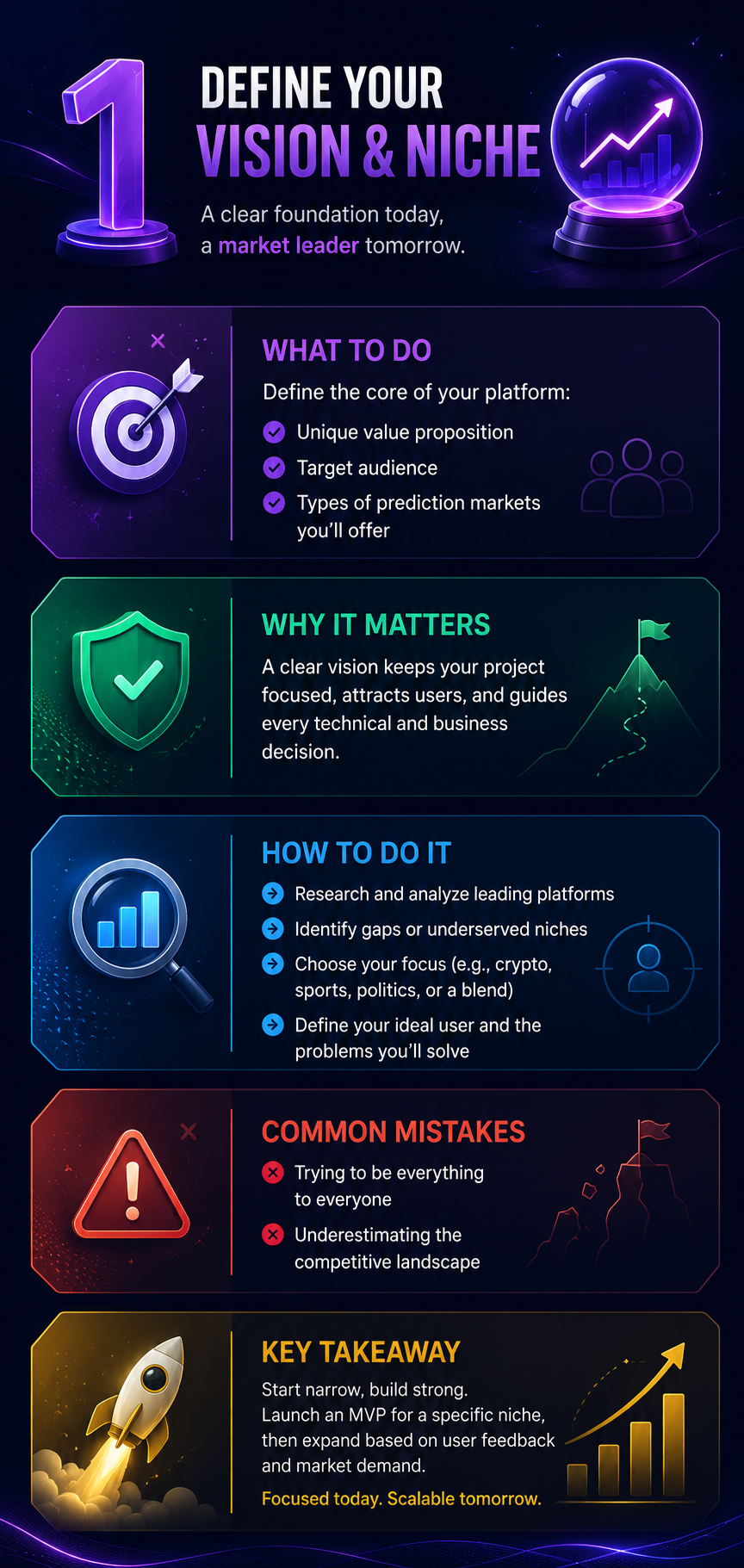
What to do: Clearly articulate your platform’s unique value proposition, target audience, and the specific types of prediction markets you’ll offer. This foundational step sets the direction for your entire development process. Consider what makes your platform different from existing solutions.
Why it matters: Without a clear vision, your project can become unfocused and fail to attract users. Myriad Markets succeeded by integrating predictions directly into web content, offering a frictionless user experience. You need to identify your own unique angle. This initial clarity will guide all subsequent technical and business decisions.
How to do it: Begin with thorough market research. Analyze successful platforms like Myriad, Kalshi, and Polymarket. Identify gaps or underserved niches. Will you focus on crypto, sports, politics, or a blend? Define your ideal user profile and what problems your platform will solve for them. For example, perhaps you’ll target a specific geographic region or a unique type of event derivative.
Common mistakes: Trying to be everything to everyone. A broad approach often leads to a diluted product that struggles to gain traction. Another error is underestimating the competitive landscape.
Pro tip: Start with a narrow focus. Build a strong minimum viable product (MVP) for a specific niche, then expand your offerings based on user feedback and market demand. This iterative approach minimizes risk and optimizes resource allocation.
Step 2: Architect a Robust and Scalable Technology Stack
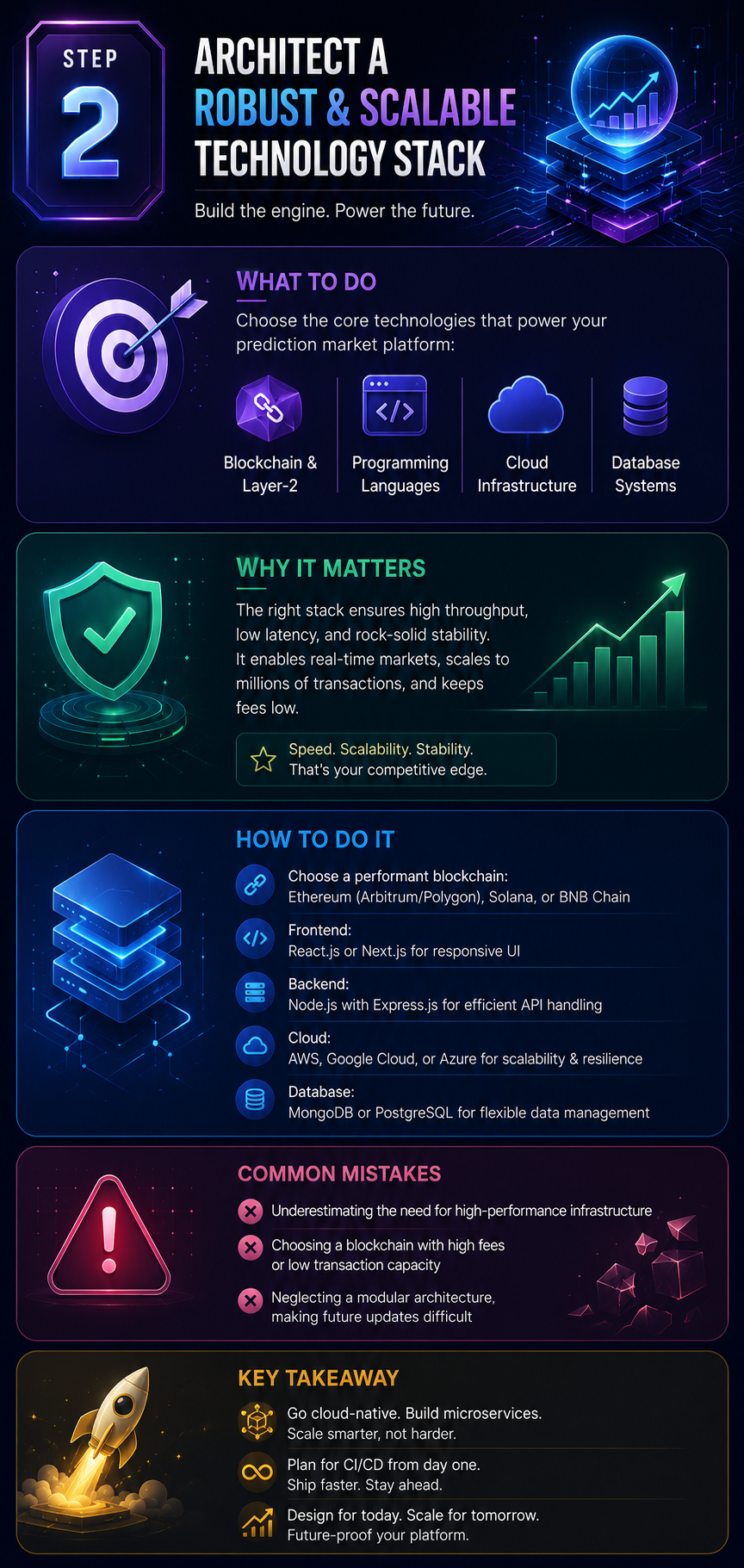
What to do: Select the core technologies that will power your prediction market platform. This includes choosing your blockchain, Layer-2 solutions, cloud infrastructure, programming languages, and database systems. Your choices here will dictate performance, security, and future scalability.
Why it matters: A prediction market app requires high-throughput, low-latency processing for real-time market data and order execution. The right technology stack ensures your platform can handle millions of transactions and maintain stability under heavy load. Myriad Markets leverages Arbitrum for scalability and low transaction fees, a critical consideration.
How to do it: Consider blockchain networks like Ethereum (with Layer-2 solutions like Arbitrum or Polygon), Solana, or BNB Chain for their speed and cost-efficiency. For the frontend, React.js or Next.js offer responsive user interfaces. Backend development often utilizes Node.js with frameworks like Express.js for efficient API handling. Cloud-native architectures on AWS, Google Cloud, or Azure are essential for scalability and resilience. Choose databases like MongoDB or PostgreSQL for flexible data management.
Common mistakes: Underestimating the need for high-performance infrastructure. Choosing a blockchain that can’t handle the transaction volume or incurs prohibitive gas fees. Neglecting a modular architecture can hinder future updates.
Pro tip: Prioritize a cloud-native, microservices-based architecture. This allows for independent scaling of different components and greater flexibility in integrating new features. Plan for continuous integration/continuous deployment (CI/CD) from the outset.
Step 3: Design Core Functionalities and Intuitive UI/UX
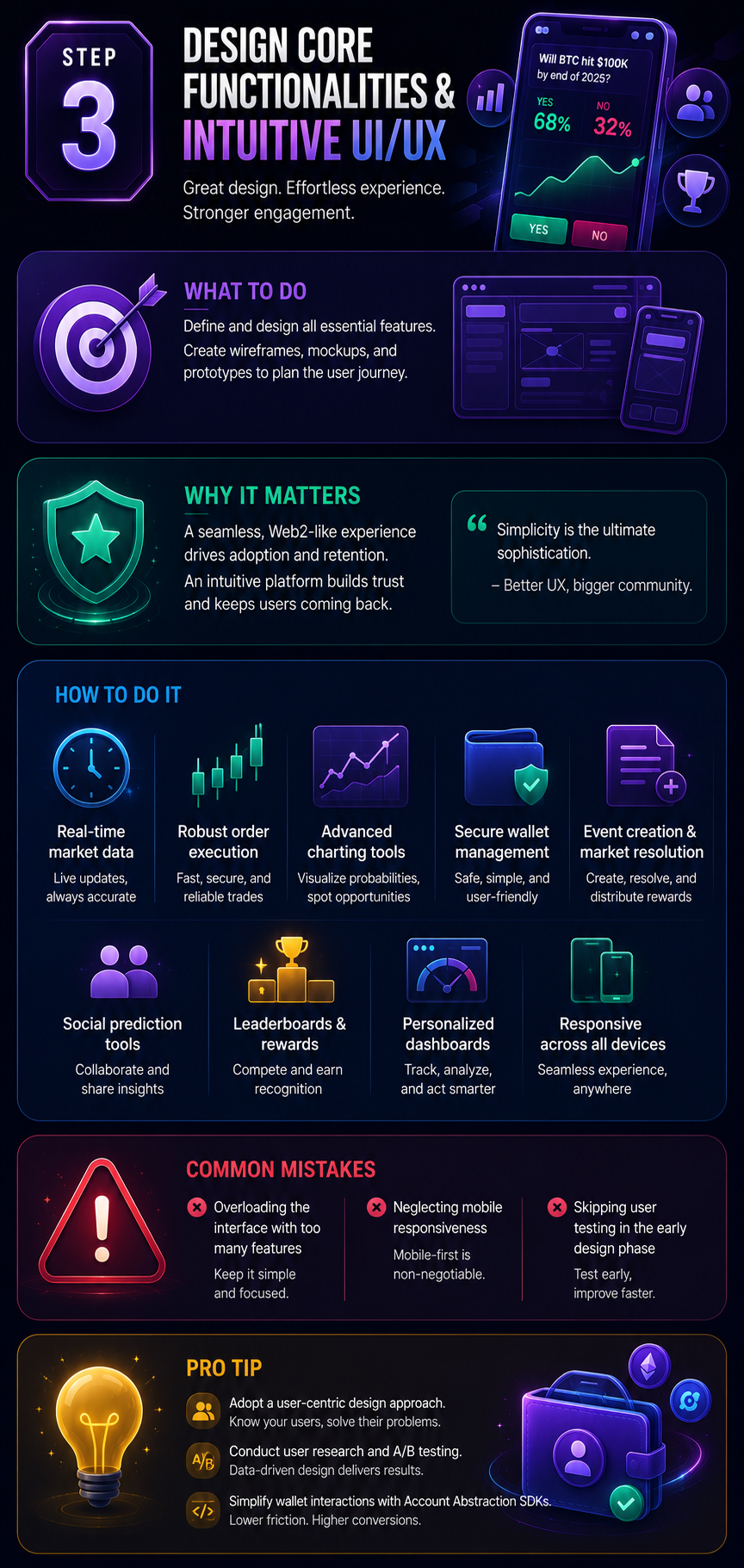
What to do: Outline and design all essential features, focusing on an intuitive user interface (UI) and a seamless user experience (UX). This step involves creating wireframes, mockups, and prototypes to visualize how users will interact with your platform.
Why it matters: A complex or clunky interface will deter users, regardless of how powerful your backend is. Myriad Markets’ rapid growth is partly attributed to its frictionless, Web2-like user experience, simplifying wallet interactions. Your platform must be accessible and engaging for both beginners and experienced traders.
How to do it: Key functionalities include real-time market data integration, robust order execution systems for outcomes, advanced charting tools to visualize probabilities, and secure wallet management. You’ll also need mechanisms for event creation, market resolution, and reward distribution. Focus on a clean, responsive design that works across devices. Implement features like social prediction tools, leaderboards, and personalized dashboards to enhance engagement.
Common mistakes: Overloading the interface with too many features, leading to confusion. Neglecting mobile responsiveness, given that many users access platforms on the go. Failing to conduct user testing early in the design phase.
Pro tip: Adopt a user-centric design approach. Conduct extensive user research and A/B testing to refine your UI/UX. Consider integrating Account Abstraction SDKs to simplify crypto wallet interactions, mirroring Myriad’s success in this area.
Step 4: Implement Smart Contracts and Oracle Integration
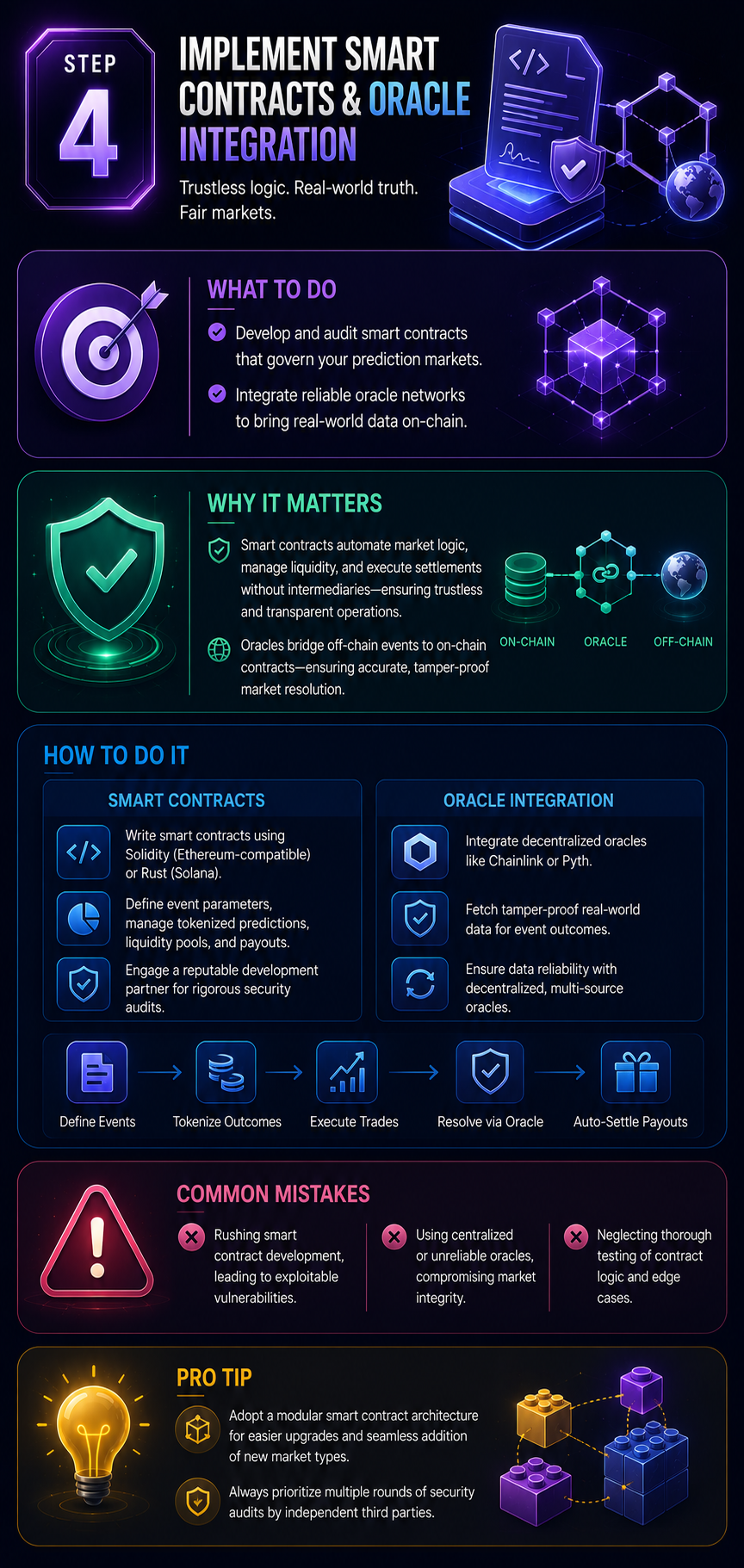
What to do: Develop and audit the smart contracts that govern your prediction markets. Simultaneously, integrate reliable oracle networks to feed real-world data into your blockchain-based system, ensuring accurate and transparent market resolution.
Why it matters: Smart contracts are the backbone of a decentralized prediction market. They automate market logic, manage liquidity, and execute settlements without intermediaries, ensuring trustless operations. Oracles are crucial for connecting off-chain event outcomes to your on-chain contracts, preventing manipulation and ensuring fairness. This is a core component to build apps like Myriad Markets.
How to do it: Write smart contracts using languages like Solidity (for Ethereum-compatible chains) or Rust (for Solana). These contracts will define event parameters, manage tokenized predictions, handle liquidity pools, and automate payouts. Engage a reputable Prediction Market Development Company for rigorous security audits of your smart contracts to identify and fix vulnerabilities before deployment. Integrate decentralized oracle networks such as Chainlink or Pyth to provide tamper-proof data feeds for event outcomes.
Common mistakes: Rushing smart contract development, leading to exploitable bugs. Using centralized or unreliable oracle solutions, which can compromise the integrity of your markets. Neglecting comprehensive testing of contract logic.
Pro tip: Implement a modular smart contract architecture. This allows for easier upgrades and the addition of new market types without overhauling the entire system. Always prioritize multiple rounds of security audits by independent third parties.
Step 5: Ensure Robust Security and Regulatory Compliance
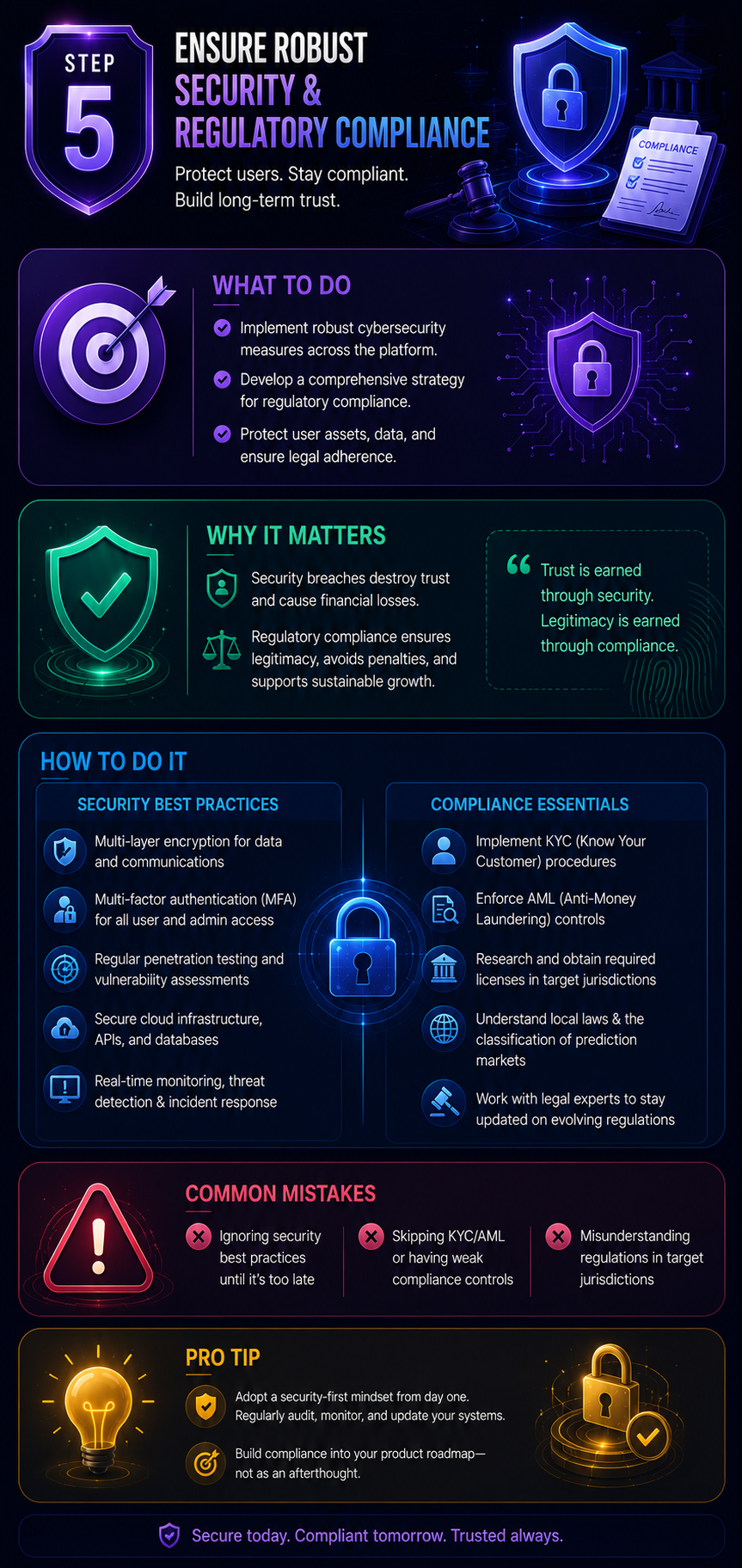
What to do: Establish stringent cybersecurity protocols and develop a comprehensive strategy for regulatory compliance. This involves implementing security measures across your platform and navigating the complex legal landscape of prediction markets in your target jurisdictions.
Why it matters: Security breaches can devastate user trust and lead to significant financial losses. Regulatory compliance is paramount for long-term viability, especially in the evolving prediction market space. Ignoring regulations can result in legal penalties and operational shutdowns. You must protect user assets and data while operating within legal boundaries.
How to do it: Implement multi-layer encryption, multi-factor authentication (MFA), and regular penetration testing. Secure your cloud infrastructure, APIs, and user data. For compliance, engage legal counsel to understand KYC (Know Your Customer) and AML (Anti-Money Laundering) requirements. Research financial licenses needed in your target regions, considering the varying classifications of prediction markets (e.g., financial derivatives vs. gambling). The U.S. CFTC’s evolving stance on platforms like Kalshi and PrizePicks highlights the need for careful navigation.
Step 6: Integrate AI/ML for Predictive Analytics and Personalization
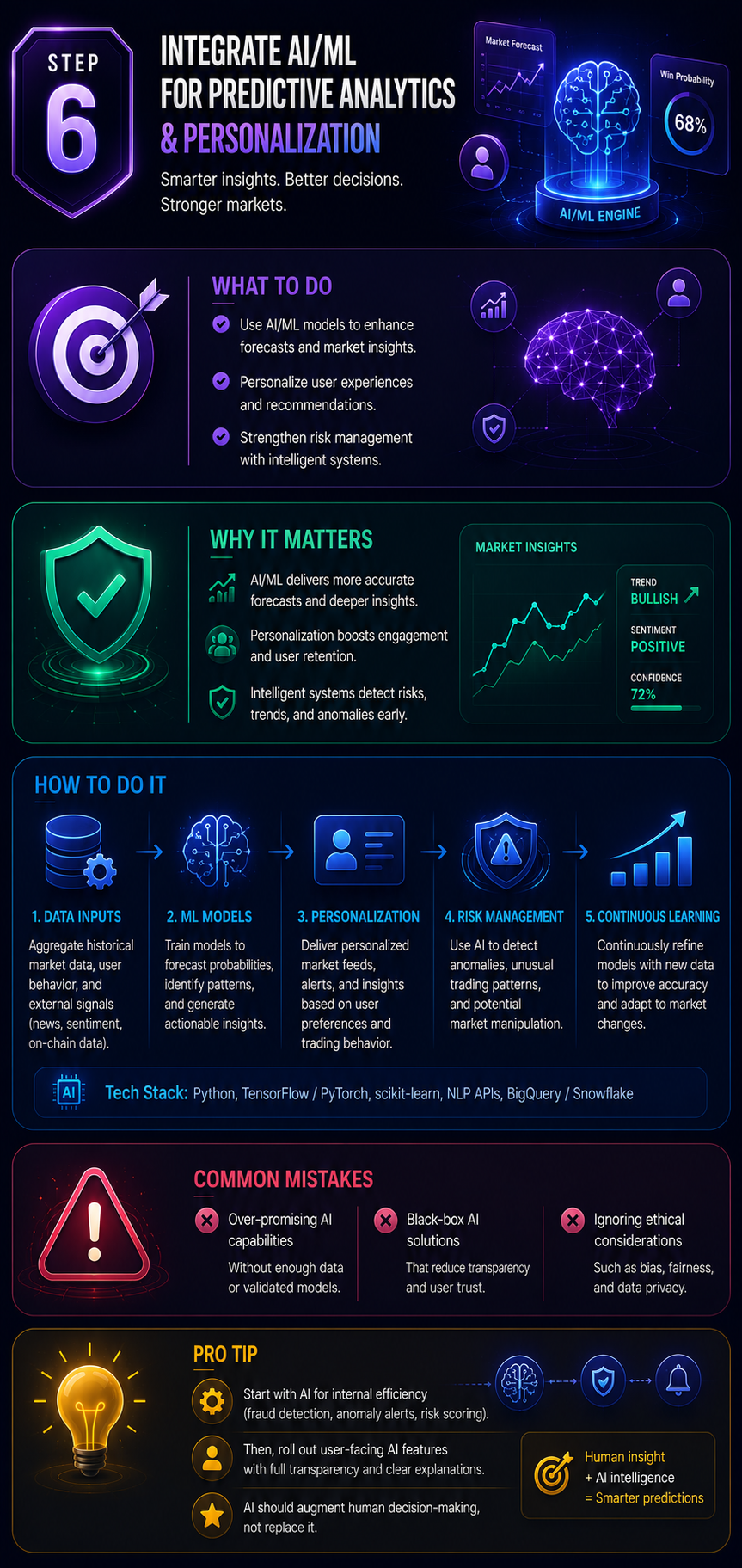
What to do: Incorporate Artificial Intelligence and Machine Learning models to enhance forecasting accuracy, personalize user experiences, and improve risk management within your platform. This moves beyond basic prediction to intelligent market insights.
Why it matters: AI/ML can provide a significant competitive advantage, offering users more sophisticated tools for making informed predictions. It can also help you identify market trends, detect anomalies, and manage platform risks more effectively. This is key to developing apps like Myriad Markets with a forward-looking edge.
How to do it: Develop ML models to analyze historical market data, user behavior, and external factors (e.g., news sentiment) to generate more accurate probability forecasts. Use AI to personalize the user’s feed, suggesting relevant markets or insights based on their trading history and preferences. Implement AI-driven risk management systems to monitor for unusual trading patterns or potential market manipulation. Start with simpler models and gradually increase complexity.
Common mistakes: Over-promising AI capabilities without sufficient data or robust models. Implementing AI solutions that are black boxes, reducing user trust. Neglecting the ethical implications of AI in prediction.
Pro tip: Begin by integrating AI for internal operational efficiency, such as fraud detection or market anomaly alerts. Once proven, gradually roll out user-facing AI features, ensuring transparency about how AI insights are generated. Focus on augmenting human decision-making, not replacing it entirely.
Step 7: Develop Monetization Strategies and Governance Models
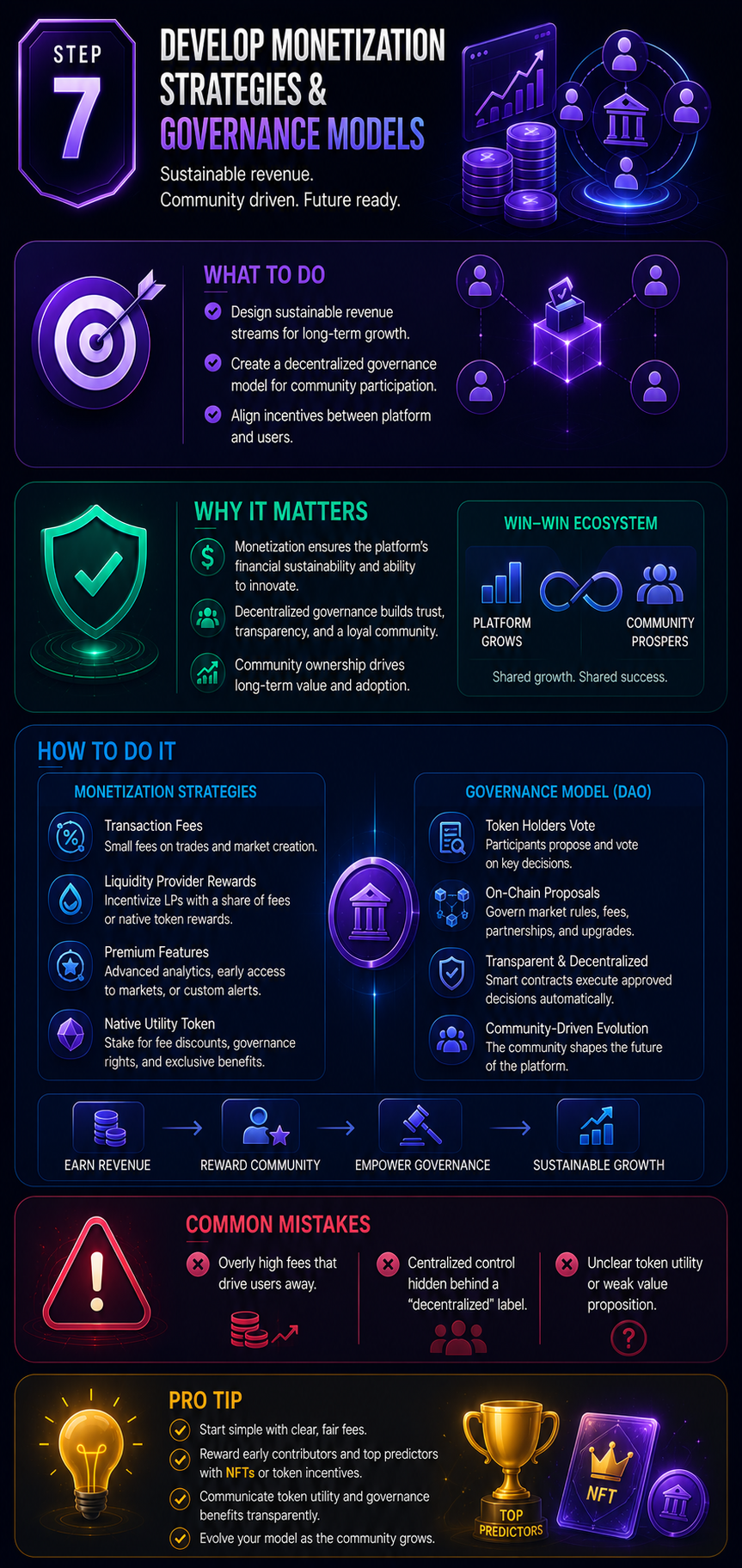
What to do: Design clear monetization strategies to ensure your platform’s financial sustainability. Simultaneously, establish a decentralized governance model that empowers your community to participate in the platform’s evolution.
Why it matters: A robust business model is crucial for long-term success and growth. Decentralized governance fosters community engagement, builds trust, and aligns incentives between the platform and its users, a hallmark of Web3 platforms. This step helps you make apps like Myriad Markets that are self-sustaining.
How to do it: Explore revenue streams such as small transaction fees on trades, staking rewards for liquidity providers, or premium features. You might also consider a native utility token that users can stake for governance rights, reduced fees, or exclusive access. For governance, implement a DAO (Decentralized Autonomous Organization) structure where token holders can vote on proposals, market rules, and platform upgrades. This ensures community-driven development and decision-making.
Common mistakes: Implementing overly aggressive fee structures that deter users. Creating a governance model that is centralized in practice, despite being decentralized in name. Neglecting to clearly communicate the value proposition of your native token.
Pro tip: Start with a simple, transparent fee structure. Gradually introduce more complex monetization and governance features as your user base grows and matures. Offer NFT-based rewards for top predictors or active community members to gamify engagement and create unique incentives.
Step 8: Launch, Monitor, and Iterate
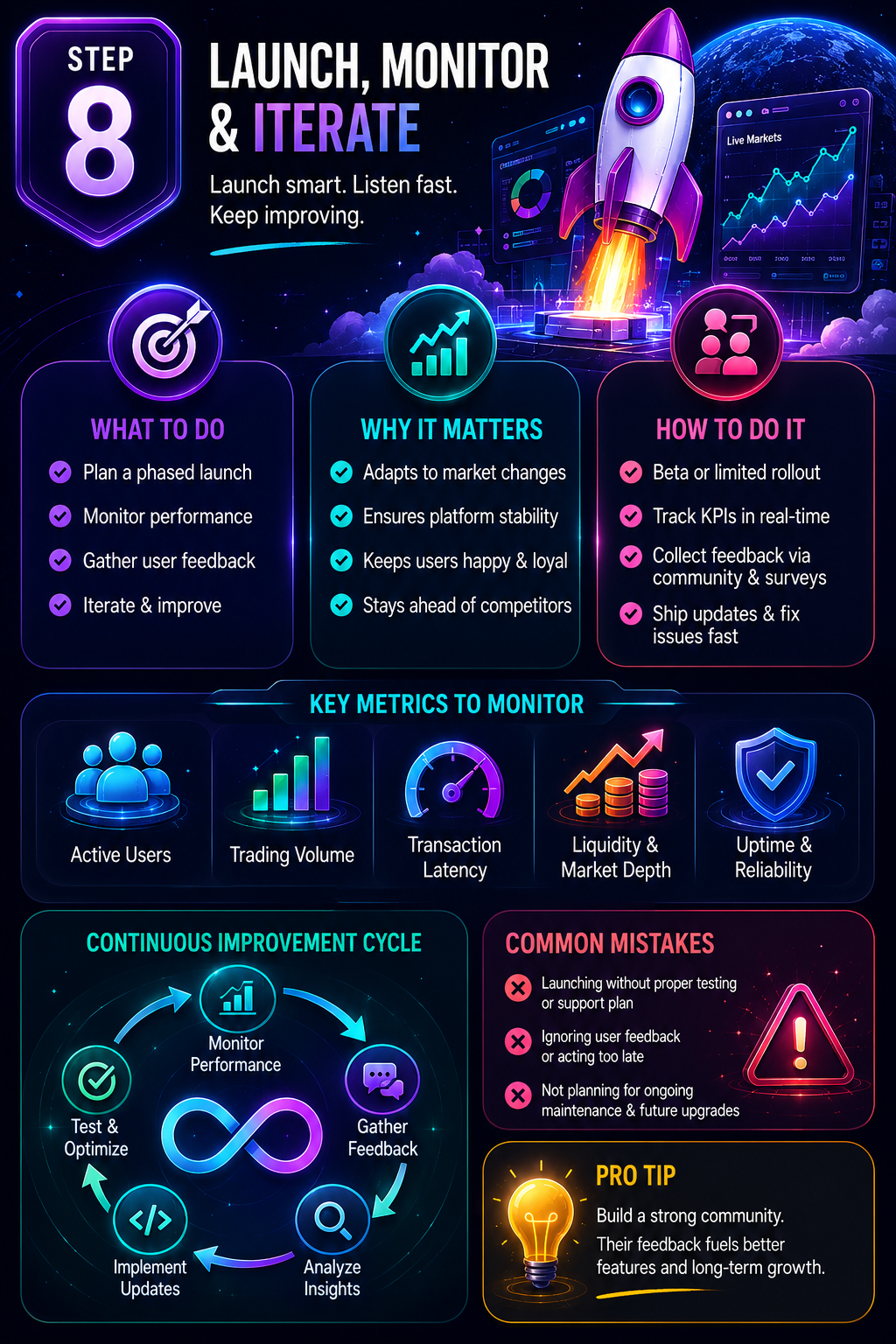
What to do: Prepare for a phased launch, continuously monitor your platform’s performance, gather user feedback, and iterate on features and improvements. This final step is an ongoing cycle of deployment, observation, and enhancement.
Why it matters: The market is dynamic, and user expectations evolve. A successful platform is never truly “finished”; it continuously adapts and improves. Post-launch monitoring ensures stability, while iteration keeps your platform competitive and relevant. This continuous cycle is vital to build app like Myriad Markets that thrives.
How to do it: Plan a strategic launch, perhaps starting with a beta phase or a limited geographic rollout. Implement robust analytics and monitoring tools to track key performance indicators (KPIs) such as trading volume, active users, and transaction latency. Establish clear channels for user feedback, such as forums, social media, or in-app surveys. Prioritize bug fixes and security patches. Regularly release updates based on user needs and emerging technologies.
Common mistakes: Launching without sufficient testing or a clear support plan. Ignoring user feedback or being slow to address critical issues. Failing to allocate resources for ongoing maintenance and future development.
Pro tip: Foster an active and engaged community. Their feedback is invaluable for identifying pain points and suggesting new features. Plan for dedicated teams for ongoing maintenance, security monitoring, and feature development to ensure your platform remains cutting-edge.